 Torah Feed
Psalm 32: Happy is he whose transgression is forgiven
A psalm of the relief that comes with confession: while the psalmist hid his sin he suffered, and when he confessed, he was forgiven. Happy is the one whose wrongdoing is pardoned and in whose spirit there is no deceit. While he kept silent his bones wasted away and God's hand weighed on him day and night, until he acknowledged his sin and God forgave it. Let every faithful person pray while God may be found; God is a hiding place. God promises to teach the way, but warns against being like a horse or mule led by bit and bridle. Those who trust God are surrounded by kindness.
Updated November 14, 2026
- Verses
- 11
- Section
- Ketuvim
- Key verse
- Verse 5
In this chapter
- Verses 1–2Happy are the forgiven
- Verses 3–5Silence, then confession
- Verses 6–7God, a hiding place
- Verses 8–11I will teach you the way
Psalm 32 in Hebrew and English
The Hebrew with full nikud beside the JPS 1917 English, both in the public domain. The summary, headings and notes on this page are Torah Feed's own.
Happy are the forgiven (Verses 1–2)
1לְדָוִד מַשְׂכִּיל אַשְׁרֵי נְשׂוּי־פֶּשַׁע כְּסוּי חֲטָאָה׃
[A Psalm] of David. Maschil. Happy is he whose transgression is forgiven, whose sin is pardoned.
2אַשְׁרֵי אָדָם לֹא יַחְשֹׁב יְהוָה לוֹ עָוֺן וְאֵין בְּרוּחוֹ רְמִיָּה׃
Happy is the man unto whom the LORD counteth not iniquity, And in whose spirit there is no guile.
Silence, then confession (Verses 3–5)
3כִּי־הֶחֱרַשְׁתִּי בָּלוּ עֲצָמָי בְּשַׁאֲגָתִי כָּל־הַיּוֹם׃
When I kept silence, my bones wore away Through my groaning all the day long.
Read Psalm 32 one verse per screen and keep your place in Torah Feed.
Get the app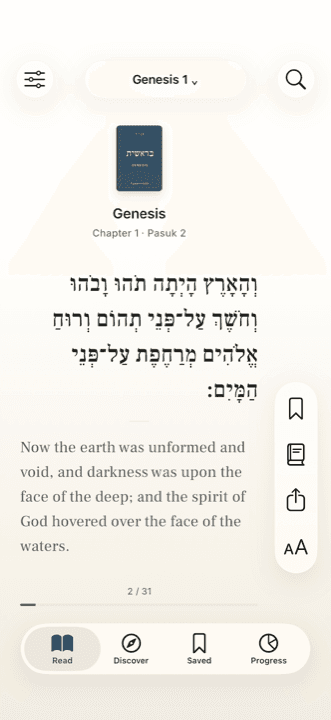
4כִּי יוֹמָם וָלַיְלָה תִּכְבַּד עָלַי יָדֶךָ נֶהְפַּךְ לְשַׁדִּי בְּחַרְבֹנֵי קַיִץ סֶלָה׃
For day and night Thy hand was heavy upon me; My sap was turned as in the droughts of summer. Selah
Key verse
5חַטָּאתִי אוֹדִיעֲךָ וַעֲוֺנִי לֹא־כִסִּיתִי אָמַרְתִּי אוֹדֶה עֲלֵי פְשָׁעַי לַיהוָה וְאַתָּה נָשָׂאתָ עֲוֺן חַטָּאתִי סֶלָה׃
I acknowledged my sin unto Thee, and mine iniquity have I not hid; I said: 'I will make confession concerning my transgressions unto the LORD', And Thou, Thou forgavest the iniquity of my sin. Selah
God, a hiding place (Verses 6–7)
6עַל־זֹאת יִתְפַּלֵּל כָּל־חָסִיד אֵלֶיךָ לְעֵת מְצֹא רַק לְשֵׁטֶף מַיִם רַבִּים אֵלָיו לֹא יַגִּיעוּ׃
For this let every one that is godly pray unto Thee in a time when Thou mayest be found; Surely, when the great waters overflow, they will not reach unto him.
7אַתָּה סֵתֶר לִי מִצַּר תִּצְּרֵנִי רָנֵּי פַלֵּט תְּסוֹבְבֵנִי סֶלָה׃
Thou art my hiding-place; Thou wilt preserve me from the adversary; With songs of deliverance Thou wilt compass me about. Selah
I will teach you the way (Verses 8–11)
8אַשְׂכִּילְךָ וְאוֹרְךָ בְּדֶרֶךְ־זוּ תֵלֵךְ אִיעֲצָה עָלֶיךָ עֵינִי׃
'I will instruct thee and teach thee in the way which thou shalt go; I will give counsel, Mine eye being upon thee.'
9אַל־תִּהְיוּ כְּסוּס כְּפֶרֶד אֵין הָבִין בְּמֶתֶג־וָרֶסֶן עֶדְיוֹ לִבְלוֹם בַּל קְרֹב אֵלֶיךָ׃
Be ye not as the horse, or as the mule, which have no understanding; Whose mouth must be held in with bit and bridle, That they come not near unto thee.
10רַבִּים מַכְאוֹבִים לָרָשָׁע וְהַבּוֹטֵחַ בַּיהוָה חֶסֶד יְסוֹבְבֶנּוּ׃
Many are the sorrows of the wicked; But he that trusteth in the LORD, mercy compasseth him about.
11שִׂמְחוּ בַיהוָה וְגִילוּ צַדִּיקִים וְהַרְנִינוּ כָּל־יִשְׁרֵי־לֵב׃
Be glad in the LORD, and rejoice, ye righteous; And shout for joy, all ye that are upright in heart.
Worth noticing
This is the first psalm called a maskil, from a Hebrew root meaning insight or instruction, and fittingly it turns in verse 8 to teaching: "I will instruct thee and teach thee in the way which thou shalt go." The first verb there, askilcha, comes from the same root.
Related reading
- Tehillim for beginners: how to start saying Psalms every day
- Can you learn Biblical Hebrew just by reading the Torah side by side?
- What is the Tanakh? Torah, Nevi'im and Ketuvim explained