 Torah Feed
Ecclesiastes 1: Vanity of vanities: nothing new under the sun
Kohelet, son of David and king in Jerusalem, declares that all is vanity and asks what people gain from all their labor. Generations come and go while the earth remains; the sun rises and sets, the wind circles, the rivers run into a sea that is never full. "There is nothing new under the sun," and nothing is remembered. Kohelet applied his heart to wisdom and found it all a striving after wind: what is crooked cannot be made straight, and more knowledge brings more sorrow.
Updated November 14, 2026
- Verses
- 18
- Section
- Ketuvim
- Key verse
- Verse 2
In this chapter
- Verses 1–3All is vanity
- Verses 4–11The endless rounds of nature
- Verses 12–18The king's search for wisdom
Ecclesiastes 1 in Hebrew and English
The Hebrew with full nikud beside the JPS 1917 English, both in the public domain. The summary, headings and notes on this page are Torah Feed's own.
All is vanity (Verses 1–3)
1דִּבְרֵי קֹהֶלֶת בֶּן־דָּוִד מֶלֶךְ בִּירוּשָׁלִָם׃
THE WORDs OF the Koheleth, the son of David, king in Jerusalem.
Key verse
2הֲבֵל הֲבָלִים אָמַר קֹהֶלֶת הֲבֵל הֲבָלִים הַכֹּל הָבֶל׃
Vanity of vanities, saith Koheleth; Vanity of vanities, all is vanity.
3מַה־יִּתְרוֹן לָאָדָם בְּכָל־עֲמָלוֹ שֶׁיַּעֲמֹל תַּחַת הַשָּׁמֶשׁ׃
What profit hath man of all his labour Wherein he laboureth under the sun?
Read Ecclesiastes 1 one verse per screen and keep your place in Torah Feed.
Get the app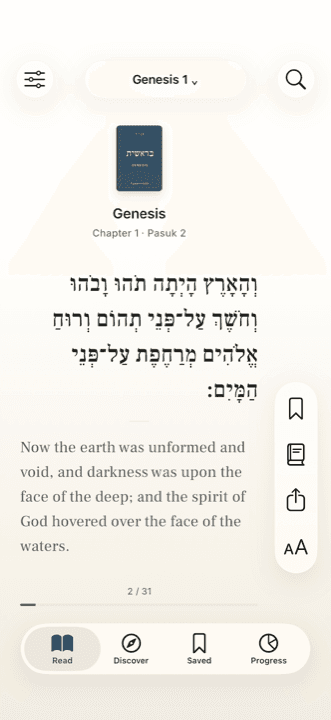
The endless rounds of nature (Verses 4–11)
4דּוֹר הֹלֵךְ וְדוֹר בָּא וְהָאָרֶץ לְעוֹלָם עֹמָדֶת׃
One generation passeth away, and another generation cometh; And the earth abideth for ever.
5וְזָרַח הַשֶּׁמֶשׁ וּבָא הַשָּׁמֶשׁ וְאֶל־מְקוֹמוֹ שׁוֹאֵף זוֹרֵחַ הוּא שָׁם׃
The sun also ariseth, And the sun goeth down, And hasteth to his place where he ariseth.
6הוֹלֵךְ אֶל־דָּרוֹם וְסוֹבֵב אֶל־צָפוֹן סוֹבֵב סֹבֵב הוֹלֵךְ הָרוּחַ וְעַל־סְבִיבֹתָיו שָׁב הָרוּחַ׃
The wind goeth toward the south, And turneth about unto the north; It turneth about continually in its circuit, And the wind returneth again to its circuits.
7כָּל־הַנְּחָלִים הֹלְכִים אֶל־הַיָּם וְהַיָּם אֵינֶנּוּ מָלֵא אֶל־מְקוֹם שֶׁהַנְּחָלִים הֹלְכִים שָׁם הֵם שָׁבִים לָלָכֶת׃
All the rivers run into the sea, Yet the sea is not full; Unto the place whither the rivers go, Thither they go again.
8כָּל־הַדְּבָרִים יְגֵעִים לֹא־יוּכַל אִישׁ לְדַבֵּר לֹא־תִשְׂבַּע עַיִן לִרְאוֹת וְלֹא־תִמָּלֵא אֹזֶן מִשְּׁמֹעַ׃
All things toil to weariness; Man cannot utter it, The eye is not satisfied with seeing, Nor the ear filled with hearing.
9מַה־שֶּׁהָיָה הוּא שֶׁיִּהְיֶה וּמַה־שֶׁנַּעֲשָׂה הוּא שֶׁיֵּעָשֶׂה וְאֵין כָּל־חָדָשׁ תַּחַת הַשָּׁמֶשׁ׃
That which hath been is that which shall be, And that which hath been done is that which shall be done; And there is nothing new under the sun.
10יֵשׁ דָּבָר שֶׁיֹּאמַר רְאֵה־זֶה חָדָשׁ הוּא כְּבָר הָיָה לְעֹלָמִים אֲשֶׁר הָיָה מִלְּפָנֵנוּ׃
Is there a thing whereof it is said: ‘See, this is new’?, it hath been already, in the ages which were before us.
11אֵין זִכְרוֹן לָרִאשֹׁנִים וְגַם לָאַחֲרֹנִים שֶׁיִּהְיוּ לֹא־יִהְיֶה לָהֶם זִכָּרוֹן עִם שֶׁיִּהְיוּ לָאַחֲרֹנָה׃
There is no remembrance of them of former times; neither shall there be any remembrance of them of latter times that are to come, among those that shall come after.
The king's search for wisdom (Verses 12–18)
12אֲנִי קֹהֶלֶת הָיִיתִי מֶלֶךְ עַל־יִשְׂרָאֵל בִּירוּשָׁלִָם׃
I Koheleth have been king over Israel in Jerusalem.
13וְנָתַתִּי אֶת־לִבִּי לִדְרוֹשׁ וְלָתוּר בַּחָכְמָה עַל כָּל־אֲשֶׁר נַעֲשָׂה תַּחַת הַשָּׁמָיִם הוּא עִנְיַן רָע נָתַן אֱלֹהִים לִבְנֵי הָאָדָם לַעֲנוֹת בּוֹ׃
And I applied my heart to seek and to search out by wisdom concerning all things that are done under heaven; it is a sore task that God hath given to the sons of men to be exercised therewith.
14רָאִיתִי אֶת־כָּל־הַמַּעֲשִׂים שֶׁנַּעֲשׂוּ תַּחַת הַשָּׁמֶשׁ וְהִנֵּה הַכֹּל הֶבֶל וּרְעוּת רוּחַ׃
I have seen all the works that are done under the sun; and, behold, all is vanity and a striving after wind.
15מְעֻוָּת לֹא־יוּכַל לִתְקֹן וְחֶסְרוֹן לֹא־יוּכַל לְהִמָּנוֹת׃
That which is crooked cannot be made straight; And that which is wanting cannot be numbered.
16דִּבַּרְתִּי אֲנִי עִם־לִבִּי לֵאמֹר אֲנִי הִנֵּה הִגְדַּלְתִּי וְהוֹסַפְתִּי חָכְמָה עַל כָּל־אֲשֶׁר־הָיָה לְפָנַי עַל־יְרוּשָׁלִָם וְלִבִּי רָאָה הַרְבֵּה חָכְמָה וָדָעַת׃
I spoke with my own heart, saying: ‘Lo, I have gotten great wisdom, more also than all that were before me over Jerusalem’; yea, my heart hath had great experience of wisdom and knowledge.
17וָאֶתְּנָה לִבִּי לָדַעַת חָכְמָה וְדַעַת הוֹלֵלוֹת וְשִׂכְלוּת יָדַעְתִּי שֶׁגַּם־זֶה הוּא רַעְיוֹן רוּחַ׃
And I applied my heart to know wisdom, and to know madness and folly, I perceived that this also was a striving after wind.
18כִּי בְּרֹב חָכְמָה רָב־כָּעַס וְיוֹסִיף דַּעַת יוֹסִיף מַכְאוֹב׃
For in much wisdom is much vexation; And he that increaseth knowledge increaseth sorrow.
Worth noticing
The word translated vanity is the Hebrew hevel, breath or vapor: something real but fleeting, impossible to hold. Verse 2 uses it five times in a single line, havel havalim, and it returns again and again through the book, Kohelet's one-word verdict on everything he examines.
Related reading
- Can you learn Biblical Hebrew just by reading the Torah side by side?
- What is the Tanakh? Torah, Nevi'im and Ketuvim explained